Posted on

Why We Source Amanita from the Carpathian Mountains

If you had told us years ago that we’d one day be sourcing Amanita mushrooms from the legendary Carpathian Mountains, we probably wouldn’t have believed you.

Yet here we are.

As an educational apothecary, we’re endlessly fascinated by where plants and fungi come from. Every landscape tells a story. Every ecosystem shapes the life growing within it.

And few places capture the imagination quite like the Carpathian Mountains.

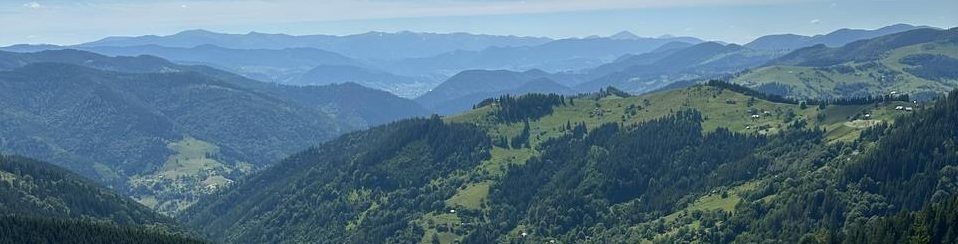
Stretching across Eastern Europe, the Carpathians are home to some of the largest remaining old-growth and wild forests on Earth. Vast stands of spruce, fir, pine, and birch create the ideal environment for Amanita mushrooms to thrive naturally, just as they have for thousands of years.

The Carpathian Mountains offer clean air, abundant rainfall, rich forest ecosystems, and generations of traditional foraging knowledge. These forests remain relatively untouched compared to many heavily developed regions of the world, allowing Amanita to grow in the environment nature intended.

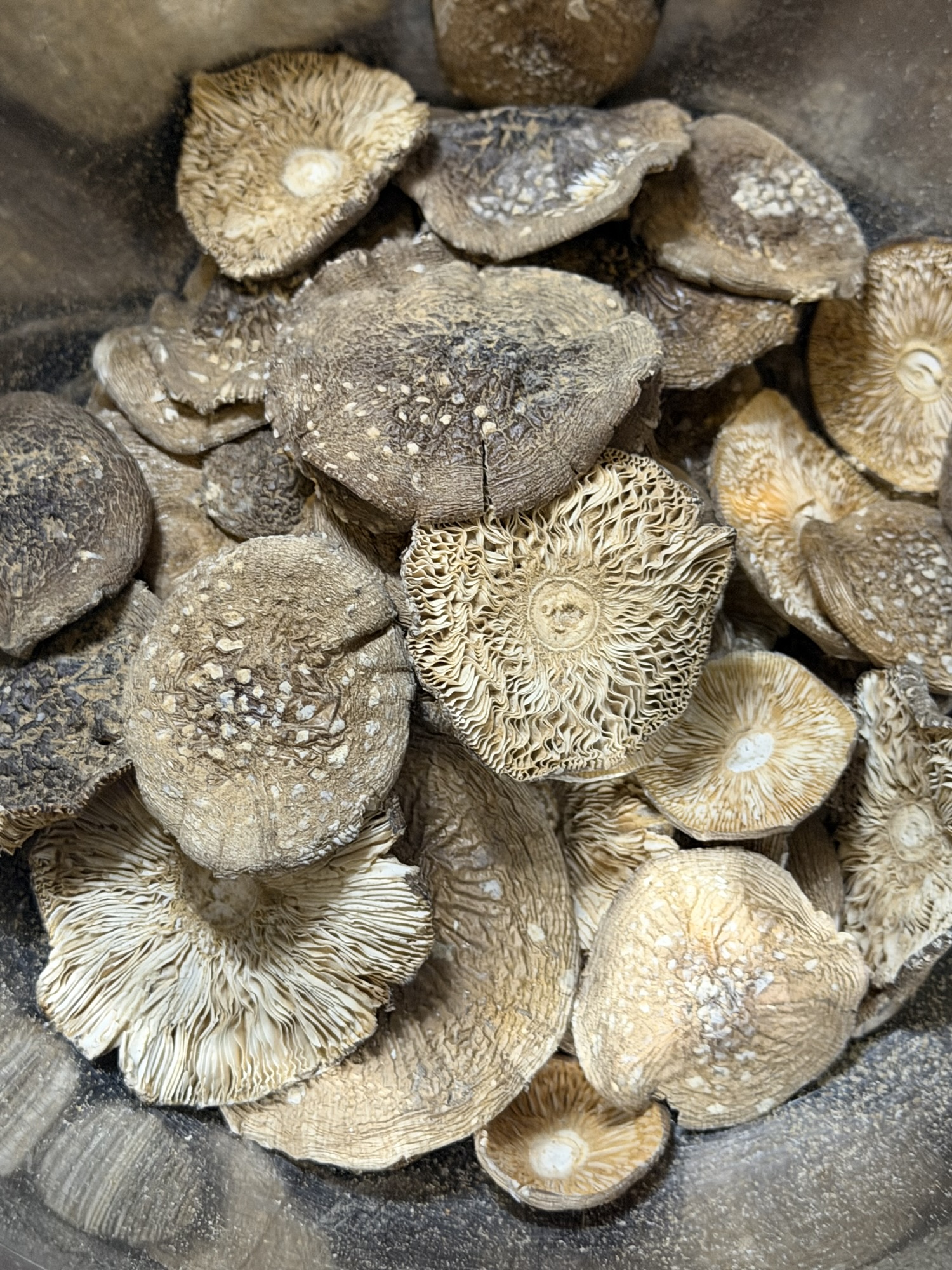
Our mushrooms are wild-foraged during peak season, carefully selected, and gently dried at low temperatures to preserve their natural characteristics.

One of the reasons we value these forests so deeply is because Amanita mushrooms cannot be farmed like most mushrooms.

Unlike Lion’s Mane, Oyster mushrooms, or Reishi, Amanita forms a living relationship with trees. Beneath the forest floor, its mycelium intertwines with the roots of spruce, pine, fir, and birch in a partnership known as mycorrhizae. The tree provides sugars produced through photosynthesis, while the fungus helps the tree access water and nutrients from the soil.

Without the forest, there is no Amanita.

This relationship is one reason Amanita has resisted large-scale cultivation. While many functional mushrooms can be grown indoors on sawdust or grain, Amanita depends on a thriving ecosystem and living tree partners to complete its life cycle.

That’s one reason the Carpathian Mountains have become so important to us.

These forests remain among the wildest and most ecologically rich landscapes in Europe. Walking through them feels like stepping into another world—one where nature still sets the pace.

For us, sourcing Carpathian Mountain Amanita isn’t simply about obtaining mushrooms.

It’s about honoring the forest they come from.

It’s about understanding the relationship between fungi, trees, soil, rain, season, and place.

Most of all, it’s about sharing that story with you.

Because every mushroom begins long before it reaches your hands.

It begins in the forest.

Did You Know?

The mushroom you see above the ground is only a small part of the organism.

The true body of the fungus exists underground as a vast network of mycelium. In healthy forests, these networks can connect multiple trees, moving water, nutrients, and chemical signals throughout the ecosystem.

Some researchers have even nicknamed these underground networks the “wood wide web.”

When an Amanita mushroom emerges from the forest floor, it’s the fruiting body of an organism that may have been living beneath the soil for years.

The next time you see an Amanita, consider what you’re actually looking at.

Not just a mushroom.

But the visible expression of an ancient partnership between fungi, trees, soil, water, and time—a relationship that has helped shape forests for millions of years.

A panoramic view of lush green mountains and rolling hills under a clear blue sky.

📚 Continue Reading

Posted on

Ibotenic Acid vs. Muscimol: Understanding Amanita’s Two Primary Compounds

Ibotenic Acid vs. Muscimol is a great place to begin understanding how to work with Amanita.

These two words don’t need to be scary. Let’s tackle them one at a time.

Ibotenic Acid

This word seems to trigger fear immediately.

“Did you say acid?”

“Isn’t that dangerous?”

“I heard ibotenic acid is neurotoxic!”

Let’s slow down for a moment and think back to science class when we learned about acids and bases.

Funny enough, those lessons were the beginning of alchemy. We just didn’t realize we’d be applying them later in life.

So let’s clear up one of the most common statements you’ll hear:

“Ibotenic acid is neurotoxic.”

Where does that claim come from?

Scientists.

Specifically, neuroscientists.

For decades, researchers have used ibotenic acid as a laboratory tool. In these experiments, concentrated ibotenic acid was injected directly into the brains of mice and rats to intentionally damage specific groups of neurons.

The goal was not healing, nutrition, and certainly not studying Amanita consumption.

The goal was to create controlled brain lesions so researchers could study what happened when those neurons died.

That’s an important distinction.

The reason many Amanita researchers and enthusiasts object when these studies are cited is because one critical detail is often left out:

The ibotenic acid was injected directly into brain tissue. It was not eaten.

Direct intracerebral injection and oral consumption are completely different routes of exposure.

So let’s be clear:

  • Was neuronal degeneration the intended outcome of the experiment? Yes.
  • Was that beneficial to the animal? No.
  • Was the experiment designed to create brain damage? Yes.
  • Does this prove that eating Amanita mushrooms causes the same type of damage? No.

The famous title “Ibotenic Acid-Induced Neuronal Degeneration” is essentially saying:

“We injected ibotenic acid into brain tissue and observed neuronal degeneration.”

That’s exactly what the researchers set out to do.

So can we please stop pretending that a laboratory brain-injection study automatically tells us what happens when someone consumes Amanita traditionally?

Now, does that mean ibotenic acid is completely irrelevant?

Absolutely not.

Ibotenic acid is considered the more stimulating and excitatory compound naturally found in Amanita mushrooms. Many people report feeling more energized, alert, physically active, creative, or mentally stimulated when higher amounts of ibotenic acid are present.

This is why understanding the difference between partially decarbed (35%) Amanita and fully decarbed Amanita matters.

And that brings us to muscimol.

Muscimol

If ibotenic acid gets most of the fear, muscimol gets most of the attention.

Muscimol is the primary compound produced when ibotenic acid is converted through the decarboxylation process.

While ibotenic acid is often associated with stimulation and excitation, muscimol is generally associated with calm, relaxation, dream-like states, introspection, altered perception, and deep rest.

Unlike ibotenic acid, muscimol primarily interacts with the GABA system, which is involved in slowing down neural activity rather than exciting it.

This is one reason many people describe fully decarbed Amanita as feeling completely different from partially decarbed Amanita.

Some report:

  • Deep relaxation
  • Improved sleep
  • Vivid dreams
  • Enhanced meditation
  • A sense of stillness or inner quiet
  • Reduced mental chatter

Of course, experiences vary from person to person, and factors such as dose, body chemistry, mushroom variety, and preparation method all play a role.

The important takeaway is that muscimol is not simply “stronger ibotenic acid.”

It is a different compound with a different mechanism and a different experience.

Ibotenic Acid vs. Muscimol

Now that we’ve met both compounds, the conversation becomes much easier.

Many discussions around Amanita make it sound as though ibotenic acid is the villain and muscimol is the hero.

Reality is usually more nuanced.

Both compounds naturally exist within Amanita mushrooms.

The real question isn’t which one is “good” or “bad.”

The real question is:

What experience are you looking for?

Higher ibotenic acid preparations may feel more stimulating, active, energizing, and outwardly focused.

Higher muscimol preparations may feel more calming, dreamlike, relaxing, and inwardly focused.

Neither compound should be understood through fear alone.

Understanding Amanita begins when we stop viewing these compounds as good versus bad and start understanding them as different expressions of the same mushroom.

The more we learn, the less we fear.

And the less we fear, the more clearly, we can think beyond.

A Quick Note on Individual Responses

At this point, it’s important to remember that these descriptions are general patterns, not universal rules.

Many people report that ibotenic-acid-forward preparations feel more stimulating, while muscimol-forward preparations feel more calming. However, not everyone experiences Amanita this way.

Some individuals report the exact opposite.

They find that ibotenic acid makes them sleepy, relaxed, or ready for bed, while muscimol leaves them feeling clear, energized, focused, and productive.

How is that possible?

The answer is simple: the mushroom is interacting with a unique nervous system.

No two people have identical brain chemistry, receptor sensitivity, life experiences, stress levels, sleep quality, nutritional status, or baseline nervous system activity.

What feels stimulating to one person may feel grounding to another.

What feels sedating to one person may feel liberating to another.

In some cases, what appears to be “energy” is actually the result of reduced mental noise. When the mind becomes quieter, people often discover they have more energy available than they realized.

Likewise, what appears to be “sedation” may actually be the body’s way of catching up on needed rest.

This is one reason personal experimentation, careful observation, journaling, and patience are so valuable when working with Amanita.

The goal isn’t to force your experience to match someone else’s.

The goal is to understand how your body responds.

The Sweat Factor

Another interesting observation comes from individuals who intentionally seek Amanita preparations that retain a portion of their naturally occurring ibotenic acid.

Some users report increased sweating and describe the experience as deeply cleansing. In certain circles, people even compare the sensation to a sweat lodge or sauna experience.

Scientifically, sweating is primarily a regulatory process used by the body for temperature control and nervous system responses. It is not generally considered the body’s primary detoxification pathway.

Yet many people still describe these experiences as physically, emotionally, or energetically releasing.

Whether viewed through a physiological lens or an esoteric one, sweat can represent movement.

Something that was stagnant begins flowing.

Something that was held begins releasing.

For this reason, some Amanita users intentionally prefer preparations that retain a percentage of ibotenic acid rather than pursuing complete conversion to muscimol.

Neither approach is inherently right or wrong.

They simply represent different relationships with the same mushroom.

So, what will you choose when it comes to ibotenic acid vs muscimol?

Continue Reading

Building a Long-Term Relationship.

Read Next →

“Browse every article by topic.”

Explore our Library →

Posted on

Amanita Pantherina: The Most Misunderstood Amanita Mushroom

Amanita Pantherina: The Most Misunderstood Amanita Mushroom


Not because it’s “dangerous.”

Not because it’s “bad.”

Because it’s different.


Most people approach mushrooms through stimulation, visuals, or intensity.

But Amanita Pantherina can move in the opposite direction
— toward stillness, heaviness, introspection, dream states, and deep nervous system slowing.

And unlike weak tinctures or watered-down Amanita products online, properly prepared Pantherina Slurry contains naturally high concentrations of muscimol and related compounds many seekers describe as grounding, immersive, and profoundly calming.


But here’s what most people don’t realize:

Preparation changes everything.


Amanita Pantherina became known for a reason.

Not because it’s “dangerous.”

Not because it’s “bad.”

Because it’s different.


Most people approach mushrooms through stimulation, visuals, or intensity.

But Amanita Pantherina can move in the opposite direction
— toward stillness, heaviness, introspection, dream states, and deep nervous system slowing.

And unlike weak tinctures or watered-down Amanita products online, properly prepared Pantherina Slurry contains naturally high concentrations of muscimol and related compounds many seekers describe as grounding, immersive, and profoundly calming.


But here’s what most people don’t realize:

Preparation changes everything.

A poorly prepared Amanita product can feel inconsistent, overstimulating, confusing, or physically uncomfortable due to excess ibotenic acid and incomplete conversion methods.

That’s why Awakening Roots focuses on fully converted Pantherina Slurry methods — not mystery extracts, “proprietary blends,” or alcohol tinctures that often lack consistency and full-spectrum depth.

Our Pantherina Slurry process focuses on:
→ Proper low-pH conversion
→ Controlled heat and time
→ Full-spectrum mushroom material
→ Consistency seekers can actually work with
→ Educational understanding instead of fear-based marketing


Many people describe Amanita Pantherina effects as:
→ deeply calming
→ physically grounding
→ dreamlike
→ introspective
→ meditative
→ sedating without chaotic stimulation


Some even compare Pantherina Slurry more to conscious stillness than a traditional “trip.”

pantherina slurry


And unlike products centered around stimulation and dopamine chasing, Amanita Pantherina often invites the body into rest, silence, and inward awareness.

That’s why experienced Amanita seekers eventually become curious about Pantherina Slurry.

Not because it’s louder.

Because it’s quieter.

Because underneath the myths, fear, and internet exaggeration is one of the most misunderstood Amanita mushrooms in existence.

And understanding changes everything.

📚Continue Reading

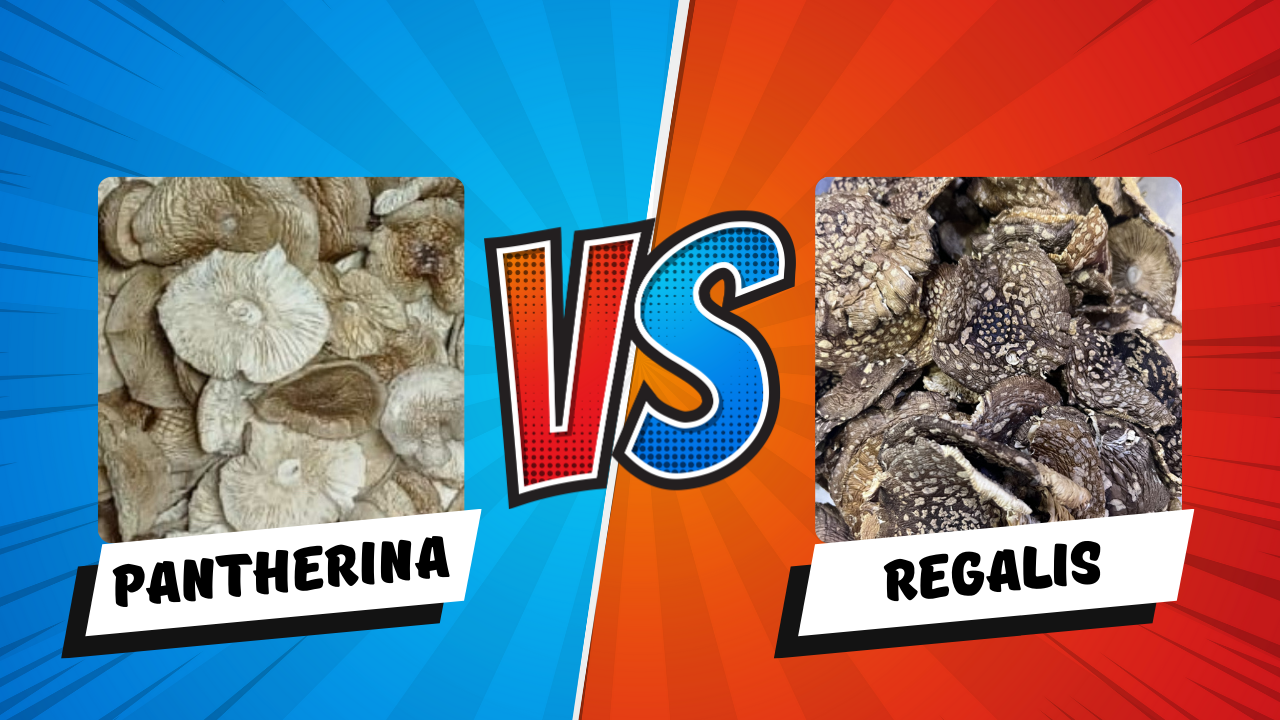
Muscaria vs. Regalis vs. Pantherina: Understanding the Differences

Read Next →


“Browse every article by topic.”

Explore our Learning Library →

P.S. Shout outs on social media (Reddit) are so helpful to the cause.

Make sure you tag us so you get CREDIT!

Want even more perks? Join our affiliate program.

* Disclaimer: For educational purposes only. This information has not been evaluated by the Food and Drug Administration. This information is not intended to diagnose, treat, cure, or prevent any disease.    
Posted on

Amanita Decarboxylation: Why Preparation Changes the Experience

Decarboxylation: Why Preparation Changes the Amanita Experience

Amanita decarboxylation is one of those phrases that sounds technical until you realize it simply explains why the same mushroom can feel completely different depending on how it’s prepared.

In muscaria, regalis, and pantherina, preparation can dramatically change the experience. Depending on how the mushroom is prepared, it may feel more stimulating, sweaty, and deeply somatic—or more calming, grounding, and supportive of rest.

These three species do behave differently in some ways—but when it comes to decarboxylation, there’s good news:
they all decarb the same way.
That means once you understand this process, you only need to learn it once.


How Amanita decarboxylation works

Decarboxylation happens when three conditions work together, in this order:

1. Citric acid — preparation

Citric acid creates the right environment by gently lowering the pH. This creates an environment where decarboxylation can occur more efficiently.

On its own, citric acid does not cause decarboxylation.
Nothing is removed yet.
It simply prepares the compound so the next steps can work efficiently.

This is why lemon juice isn’t ideal. While lemon contains citric acid, it also contains sugars, fibers, oils, and highly variable acidity. That inconsistency makes the process unreliable. Pure citric acid, on the other hand, is stable and predictable.

There’s also a practical reason: citric acid works in tiny amounts. Lemon juice does not—you’d need so much of it that it overwhelms the preparation and becomes unpalatable.

2. Heat — activation

Heat supplies the energy needed for the change to begin.
This is where the structure can actually shift.

Without heat, the process stalls.
With heat, decarboxylation becomes possible.

3. Time — completion

Time allows the change to finish and stabilize.

Rushing this step leaves the process incomplete.
Given enough time, the conversion can continue toward completion.


Why this matters

Using acid alone prepares but does not convert.
Using heat alone can be uneven or inefficient.
Using heat without time results in partial conversion.

When citric acid, heat, and time work together, the process becomes intentional instead of accidental.

That’s decarboxylation—nothing mystical, nothing forced—just the right conditions aligned so the change can actually occur.


About dehydration and “partial decarb”

One important thing to understand is that all of our specimens already begin at roughly 35% decarboxylated. This happens during dehydration.

Heat alone does cause decarboxylation—just like with cannabis. So if you’re thinking, “Wait, I thought drying the mushroom already decarbed it?” — you’re not wrong.

What heat does is start the process.
But heat by itself only takes it so far.

To move beyond that baseline and continue converting toward a fuller muscimol expression, additional conditions are needed.

That’s where environment and method come in.

Dehydration initiates decarboxylation; intentional preparation is what carries it the rest of the way.


I hope this gave you some insight on understanding Amanita decarboxylation. If you want to walk through the process yourself, you can check out our DIY Decarb guide. And if the science still feels fuzzy—or you’d rather skip the steps entirely—you can always let us handle the conversion for you and grab a Slurry instead.

📚Continue Reading

Not all Amanita microdosing products are created equally. Learn the differences between whole mushroom preparations, extracts, gummies, and other products so you can make more informed decisions.

➡️ Read Next: The Truth About Amanita Microdosing Products

“Browse every article by topic.”

Explore our Library →

Posted on

Reverse Tolerance with Amanita: Why Less Feels Like More Over Time

Reverse tolerance with Amanita muscaria is one of the most surprising parts of the journey. Unlike substances that require increasing your dose to feel effects, Amanita often works the opposite way—where the more you work with it, the less you need.

In this post, we’ll explore what reverse tolerance means, how it shows up with muscimol and ibotenic acid, and why tuning into your body matters more than chasing effects.

Reverse Tolerance with Amanita: Why Less Feels Like More Over Time

🍄 Understanding the gentle unraveling of your nervous system


🌿 What is Reverse Tolerance?

Reverse tolerance is a fascinating phenomenon where you need less of a substance over time to feel its effects—the opposite of what happens with most substances.

With Amanita (like muscaria, regalis, and pantherina), many users find that as their body learns to interact with muscimol—the primary active compound—smaller amounts feel deeper, more pronounced, and more energetically aligned.


🔄 Why Does This Happen with Amanita?

The science points to GABA-A receptor modulation. Muscimol acts as a GABA agonist, calming the central nervous system. Over time, your body sensitizes to this calming effect, especially if you’ve lived in a hypervigilant or fight-or-flight state.

But it’s not just chemistry.

It’s also your nervous system finally trusting the stillness.
The more often you enter that state, the more easily your body returns to it.

This is the magic of entrainment—your system learning a new rhythm.


✨ Personal Reflection: “I Didn’t Feel Anything”

The first time I worked with Amanita, I almost dismissed it.
I was expecting fireworks, colors, movement… but what I got was silence.

And at first, that felt like nothing.
But the more I sat with it, the more I realized—that silence was the medicine.
My body, for once, wasn’t bracing. My mind wasn’t spiraling.
And that calm… was so unfamiliar, I didn’t even know it was working.

Weeks later, I needed less. I wanted less.
Because the portal had opened.
My system remembered.


⚠️ Caution: Don’t Chase the Feeling

Reverse tolerance only works if you don’t override it.

If you keep increasing your dose to “feel something,” you may miss the beauty of subtlety.
You’re not supposed to need more. You’re supposed to feel more with less.

Stay with it.

Let the quiet unravel you. Let the medicine whisper.


🔍 Signs It’s Working (Even If You Think It’s Not)

  • You feel calmer during moments that used to activate you
  • You sleep more deeply
  • You respond instead of reacting
  • Your thoughts have more space between them
  • Your breath slows without you trying
  • You feel safe in your own body—maybe for the first time

🌱 Next Steps: Let It Unfold

If you’ve just begun working with Amanita and feel like it’s “not working,” that may be your greatest sign it actually is.
Your job is to stay consistent.

👉 Start small
👉 Stay with the same dose for at least a week
👉 Journal your shifts
👉 Don’t expect a “trip”—expect a return

A return to self.
To stillness.
To your natural rhythm.


📚Continue Reading

muscaria full muscimol

Curious how a fully decarbed Amanita slurry is prepared and why many people choose this method? Explore our answers to the most common questions about slurry, preparation, storage, and practical use.

➡️ Read next: Fully Decarbed Amanita Slurry: Questions & Answers


“Browse every article by topic.”

Explore our Library →

Posted on

Amanita Pantherina vs. Regalis: My Experience and Key Differences

Let’s talk about my experience with higher doses of Amanita. Specifically, Pantherina Vs Regalis.

I personally find myself gravitating toward the pantherinoid group rather than the muscarioid group.

Now, while regalis is an incredibly beautiful and powerful mushroom, it does fall under the muscarioid category. Because of that, it naturally carries higher concentrations of muscarine.

At lower doses, that isn’t usually a problem. Once the dose is pushed higher, I begin experiencing very noticeable muscarinic effects.

For me that shows up as profuse sweating and excessive salivation, which can quickly become uncomfortable and distracting.

For that reason, when I’m looking to go deeper with Amanita, I choose pantherina as my preferred ally.

That being said, even with pantherina, I approach with great caution. This is not a mushroom to take lightly. While it can open remarkable doors, too much Amanita is never enjoyable.

The experience demands respect, and overindulgence comes with consequences.

If you ignore that and push too far, Amanita has a way of “slapping you back,” and it can be a very harsh and humbling lesson.

So in short, while regalis and pantherina are my two favorites, when it comes to higher-dose journeys, pantherina is the tool I trust. But always with reverence, always with restraint, and always remembering that Amanita is a teacher best approached with respect rather than excess.

I hope that gave you some insight on Pantherina vs. Regalis and my experience with higher doses of Amanita. Out of all the varieties, those two are my personal favorites to work with.

Posted on

What Does Amanita Muscaria Really Feel Like?

Amanita Muscaria Feel Like

🍄 What does Amanita muscaria really feel like, and how is it different from the “magic mushrooms” people talk about?
This is the number one question people ask when they first hear about Amanita. Curiosity, caution, and confusion often come together. Some imagine a psychedelic trip full of visuals. Others fear toxicity. The truth is simpler, gentler, and a lot more interesting.

Before you dismiss this…
I want to invite you to share your Amanita story.
How has it touched your life? Why did you choose it? What has it opened for you?

You can reply to this email or even join me on a Zoom recording to share your experience with the community. With your permission, we’ll publish it on our social platforms so others can see the real gift Amanita offers through lived stories like yours.

Because Amanita isn’t just a mushroom. It’s a gift transforming our lives, with peace, rest, and so much more— and when we share it, we pass that gift forward.

Lets Continue..


The Common Misunderstanding

When most people hear the word “mushroom,” they immediately think of magic mushrooms — the psilocybin kind. Those are known for producing hallucinations, visuals, and shifts in perception.

But Amanita muscaria is not psilocybin.
It has its own chemistry, its own history, and its own way of working with the human body and mind.

Instead of psilocybin, Amanita carries two compounds: ibotenic acid and muscimol. Through traditional preparation, ibotenic acid transforms into muscimol — a compound that interacts with the brain’s GABA system, which is our natural calming, inhibitory pathway.

That’s why the experience is not about tripping. It’s about softening.


So, What Does Amanita Actually Feel Like?

Describing the experience of Amanita is a little like describing a dream — words only capture fragments. But here are some common themes people report:

  • Calming: The nervous system slows down. Muscles unclench. It feels like the body exhales.
  • Grounding: A sense of heaviness, but in a comforting way — like being held closer to the earth.
  • Dream-like: Thoughts blur at the edges, imagination expands, and waking life feels closer to a lucid dream.
  • Reflective: Emotions or memories may surface, not as a rush but as gentle invitations to process or release.
  • Sleep-shifting: Many notice changes in dream recall or the depth of rest.

My Experience: An Awareness Mushroom 🌿

For me, Amanita is an Awareness Mushroom.
It wakes me up to things in my life that I’m not happy with. I’m not mad about them either — I just become aware. Not complacent, but understanding. I begin to access my subconscious mind, where I naturally become more humble.

When I soften, I can enjoy life without fear, anxiety, or overwhelming energy. That’s the gift: softness. And what’s amazing is that this comes from just a mushroom. Something that grows from the earth.

I don’t use synthetics — I prefer the real deal, straight from the forests to my door. I love when Amanita calls to people. We found it in abundance in Oregon, and I’ve seen it up close in New York. From West to East, this mushroom shows itself.

I enjoy it in many forms, but I work most with the panther slurry. It’s convenient, fully prepared, and ready to use. I can add it to soup or a drink, or take it straight. Anywhere between 25–150 ml feels right, sometimes more — but that’s for an experienced-user conversation. Macros are no joke.

Do I recommend it? Only if asked. This path is personal. I’ve seen misunderstandings create friction, so now I emphasize self-responsibility over prescriptions.

For some people, Amanita feels like “nothing.” That doesn’t surprise me. Nothing can be misunderstood — but nothingness, softness, quiet… these are states we don’t often value, even though they hold the seeds of awareness.

That’s where humility grows. In the quiet, the chatter of the world stops. You drop into presence. You feel bold and courageous because your nervous system finally allows you to be. Fear dissolves.

For me:

  • A microdose of slurry brings calm, focus, and creative energy.
  • A microdose of 35% decarbed Amanita (capsule or shake) can feel similar.
  • Larger amounts bring more energy — and as the dose grows, it can tip into overwhelming territory: twitching, loops in time, distortion, astral projection. These spaces can be profound, but they’re not easy to navigate.

How It Differs From Magic Mushrooms

  • Different compounds: Amanita has muscimol, not psilocybin.
  • Different effects: It’s more about calm, grounding, and dreams — not colorful hallucinations.
  • Different traditions: Siberian shamans, Nordic myths, and European folklore placed Amanita in ritual and spiritual contexts, not recreational ones.

Why Preparation Shapes the Experience

Raw Amanita can be harsh because of its ibotenic acid content. Traditional methods — heating, acidifying, drying — transform that chemistry.

Think of it like cooking beans or potatoes: raw, they’re hard to digest. Cooked, they nourish.
With Amanita, preparation shifts the experience from jagged to gentle.


The Takeaway: A Quiet Teacher

So, what does Amanita muscaria really feel like?

For me, it’s awareness. It’s presence. It’s a teacher that softens me enough to love life more deeply, and boldly live in truth.

It won’t always feel like fireworks. Sometimes it feels like silence. Sometimes it feels like humility. But that, too, is medicine.


📚Continue Reading


Where do Amanita mushrooms grow?

Where Do Amanita Mushrooms Grow?

Read Next →

Posted on

🌿 Amanita Guided Meditation

Reconnecting with Your Body Through Rooted Awareness with our Amanita Guided Meditation

Most who find their way to Amanita aren’t just curious—they’re seeking. Whether it’s rest, clarity, energy, or relief from overwhelm, there’s a longing underneath it all. A desire to feel whole again.

This is why an Amanita Guided Meditation is more than just a practice—it’s a way to remember what your body already knows.

Why Amanita? Why Now?

Amanita (specifically muscaria, regalis, and pantherina) interacts directly with your central nervous system (CNS). It doesn’t force—it invites. By calming overactive nerves and softening internal noise, Amanita can open the door to something many of us have forgotten:

👉 How to trust ourselves.
👉 How to feel again.
👉 How to listen to what’s real—inside.

Begin by Dropping In

Before you begin any Amanita journey, start by asking:
“What am I carrying in my body today?”

This isn’t about chasing visions or expecting a miracle fix. Instead, it’s about settling into your inner terrain—noticing your energy, your tension, your emotion. These are clues. Your nervous system has a language, and Amanita helps you learn how to hear it again.

Activating the Roots Within

We often talk about “grounding” like it’s a surface act—bare feet on the Earth. But true grounding is energetic.
It’s the awareness of your body’s root system:

  • Where do you hold energy?
  • Where do you leak it?
  • What would happen if you called it all back?

Amanita, especially in low and steady doses, creates the perfect environment for this inquiry. It quiets the noise and makes space for clair-abilities—subtle senses like intuition, inner vision, and deep knowing—to reawaken.

How to create your Amanita Guided Meditation

Here’s the basic flow, but goal is to make it yours:

Take your Microcapsules or sip of Amanita Slurry and Acknowledge the time.

You will have 40-90min to be in the set and setting you have established.

Finish up all loose ends, clean your space, turn phone on do not disturb, begin setting up your ambiance- incense, diffuser, candles, whatever speaks to you for this moment.

Ideally you want a quiet place where you can sit or lie down without distractions.

It’s time to Drop into awareness of your body. I

We will use breath to anchor.

Choose what resonates with you and begin.

🎧 ✨ Woo Woo Resource: Root Chakra Guided Meditation (10 Min)


🌀 Why This Approach Works (Energetic + Somatic View)

While chakra-based meditations are often seen as “spiritual,” they also hold immense somatic and psychophysiological value—especially when paired with breath.

Here’s why this approach helps shift your state:

  • Each chakra maps to a cluster of nerves in the body. For example, the root chakra corresponds with the pelvic nerve plexus and the sacral base of the spine—activating these areas through breath and awareness increases oxygenation and body awareness.
  • Guided visualizations and vocal toning stimulate the vagus nerve, aiding in regulation of heart rate, digestion, and emotional balance (key functions of the parasympathetic nervous system).
  • Slow, rhythmic breathing with visualization lowers cortisol and supports alpha brainwave states, associated with calm, creative insight, and neuroplasticity.
  • Feeling energy in the body (even subtly) brings you back to the present moment—a practice shown in mindfulness research to reduce anxiety, enhance clarity, and support emotional resilience.

Whether or not you “believe” in the chakras, the felt sense of energy moving through the body becomes a doorway to safety, stillness, and reconnection with self.

🎧🔬 Science‑Based Breathwork for Grounding


“If you don’t resonate with chakra language or energy frameworks, try this secular breathwork session by Deb Dana. It’s a compassionate, science‑based approach to grounding and settling the nervous system—perfect pairing for your Amanita journey.”

🧠 Why This Approach Works

Studies show that intentional, guided breathwork can:

  • Increase cerebral oxygenation and blood flow
  • Reduce sympathetic arousal and stress VogueNature
  • Support calm, presence, and reset—especially when practiced consistently and mindfully

Unlike fast or intense techniques, guided slow breath exercises like this are shown to be more effective for stress reduction when practiced for at least 5 minutes and supported with clear instruction pmc.ncbi.nlm.nih.govpositivepsychology.com.

🌬 A Note from My Own Experience

The other day, while sitting with Amanita, this entire post began writing itself through me.

I was in the stillness. And for a moment, I thought, “I feel nothing.”
But then it hit me—peace feels like nothing only when we’ve been used to noise.

When your CNS finally stops racing, you’re not going to feel a rush of fireworks.
You’re going to feel… quiet. Ease. Spaciousness.
It’s subtle—because it’s so loud compared to the chaos we normalize.

We often expect Amanita to create some altered, energetic experience. And yes, at higher doses, it absolutely can.
But when taken with intention—for nervous system regulation or deeper rest—the beauty is in the calm. In the clarity.
In the truth that your healing doesn’t have to scream to be real.

Because of my own background with energy work, I’m able to sense the micro-movements in my body.
The shifts in breath, the tingles in my palms, the sudden release in my gut.
But I realize that not everyone has that framework yet.
Which is why I shared a meditation above—to help guide you back to that inner knowing.

Amanita gives you the space to tune in.
Pause, observe, and feel.
To go deep—not with force—but with reverence.
To access the parts of yourself that are waiting to be heard.

That’s the work. That’s the magic.
And if you’re here, it’s because something inside you is already listening.

🌀
With stillness and love,
Marlucia

📚Continue Reading

Food, timing, and preparation can all influence how people experience Amanita. Explore how fasting, eating, and your relationship with nourishment may shape the journey.

➡️ Read next: Amanita & Fasting

“Browse every article by topic.”

Explore our Library →

Posted on

Why Microdosing May Not Be Working for You

microdosing without results

Let’s talk about a common experience in the Amanita muscaria world: microdosing without results.

By definition, microdosing refers to taking a sub-perceptual dose — one that does not produce noticeable psychoactive effects but may support mood, clarity, or nervous system function over time. That said, sub-perceptual doesn’t mean ineffective — but it also doesn’t mean entirely unfelt.

Here’s where it gets tricky: if the preparation is poor (low in muscimol or improperly decarbed), it might not even be delivering enough active compound to achieve subtle effects. So, while microdosing shouldn’t feel like a full experience, it should still do something — over time you may notice better sleep, calmer, and reduced stress reactivity. If you’re not noticing even those gentle shifts, it’s likely the preparation itself is the issue.

If you’ve tried tinctures or capsules and felt nothing, you’re not alone. This happens often — and not because Amanita isn’t working, but because of how it’s being prepared.

Many commercial tinctures are alcohol-based, and that presents a problem. Muscimol — the active compound in Amanita muscaria, regalis and pantherina — is water-soluble, not alcohol-soluble. Ibotenic acid, which is also present in the mushroom, must be decarboxylated (heat-converted) into muscimol to become bioavailable. Ethanol doesn’t facilitate this transformation well, meaning you may be left with a product that’s not only ineffective but potentially misleading.

Alcohol itself is psychoactive, and some users may confuse the subtle sedation of the alcohol with the effects of Amanita. Combine this with the fact that many capsules on the market are filled with degraded or unidentifiable bulk powders, and it becomes clear: you’re often not feeling Amanita — you’re feeling filler, placebo or nothing at all.


Alcohol Tinctures: Why They Often Miss the Mark

In herbalism, alcohol tinctures are often effective — but their success depends on the chemistry of the plant or mushroom being extracted. Alcohol is excellent at pulling out alkaloids, terpenes, and resins — which is why it’s the go-to for herbs like valerian, echinacea, and skullcap.

However, in the case of Amanita muscaria, the key active compound — muscimol — is not one of those alcohol-soluble constituents. It’s a polar, water-soluble molecule, and it requires heat decarboxylation to be active (transforming from ibotenic acid). Alcohol neither extracts it well nor facilitates that conversion.

So, in the case of Amanita, they’re more likely to be ineffective — or worse, misleading — unless they include a decarbed water extract component.

Some alchemists do use a more effective method


If you’re a great alchemist, as they do exist, they create a water-based extract to decarb and draw out muscimol, and only then add a small amount of alcohol to preserve it. This hybrid approach can be effective — but it’s rare, and not what most commercial tinctures offer.

We used to make our own Amanita extract this way as well — a carefully decarbed, water-based preparation with alcohol added afterward for shelf stability. While this method can work, we found that the extract lost some of its potency over time, particularly during the transition and preservation phase. Additionally, many of our clients and community members were specifically seeking a non-alcoholic option for nervous system support, spiritual practice, or trauma recovery. That need pushed us to evolve beyond the alcohol-preserved model entirely.

Unfortunately, most tinctures on the market skip this step. They rely solely on ethanol as a solvent, which is where the problem begins.

There’s growing evidence that alcohol tinctures are not only ineffective for Amanita muscaria — they may be giving a false impression of effects altogether. Muscimol, the key compound responsible for Amanita’s sedative and calming properties, is poorly soluble in alcohol (Wikipedia). Likewise, ibotenic acid — its precursor — is also water-soluble and requires heat to convert, something ethanol does not reliably provide.

A study on Amanita tinctures made with 80-proof vodka found low concentrations of muscimol and ibotenic acid, further proving that alcohol alone is a poor solvent for this mushroom’s unique chemistry (PMC10574166).

In short, many users are either feeling nothing — or mistaking the mild sedative effects of alcohol itself for the mushroom’s medicine. This creates a placebo trap and a misunderstanding of what Amanita is capable of.

Why We Make Slurry

If you’re genuinely looking to feel Amanita — especially its calming, sedative, and grounding effects — you need a preparation that honors the mushroom’s chemistry. That’s why we make slurry.

A slurry is a water-based, fully decarboxylated extract. It’s created by gently simmering the mushroom at a specific temperature and pH to convert ibotenic acid into muscimol while preserving other beneficial compounds. This approach maximizes muscimol concentration, minimizes ibotenic acid, and delivers the full-body experience Amanita is meant to provide.

Scientific literature supports this method. According to patent data (WO2022187974A1), even dried caps can contain ibotenic acid concentrations as high as 1800 ppm, with muscimol levels remaining low unless actively decarbed through heat and acidified water. In many commercial preparations, the ratio of ibotenic acid to muscimol remains heavily skewed — sometimes as high as 9:1 — making the extract stimulating or ineffective rather than relaxing.

In contrast, a properly prepared slurry is:

  • ✅ Water-soluble and bioavailable
  • ✅ High in muscimol, low in ibotenic acid
  • ✅ Free from alcohol interference
  • ✅ Aligned with traditional and modern extraction science

My Experience With Slurry

After five years working with Amanita, I’ve tried every form. Slurry wins. I’ve used small amounts for clarity and large doses for deep work. One macro session left me so disoriented that integration became essential. I was lucky to have support.

Set and setting matter. If you’re going deep, make sure you’re in a safe, quiet space. Healing can get loud. You don’t want to unpack your nervous system while someone’s asking what’s for dinner.


Most People Just Want to Feel Better

You don’t need to unravel your entire self. Most people just want better sleep, less anxiety, or a grounded reset. Amanita can help — when it’s done right.

It’s not a psychedelic. It’s not here to show you visuals. It works gently with the GABA system — more whisper than roar. That’s why when people finally try a well-made slurry, they often say, “Oh… now I get it.”


If that’s the experience you’re seeking — calm, sedation, clarity — I encourage you to try Amanita as a slurry. This is the way it wants to be worked with.


Additional Insight from Patent Research

Amanita muscaria extract, when properly prepared through water-based decarboxylation methods, has multiple applications for human health. According to patent literature, it may reduce pain, address inflammatory disorders, benefit immunity, and support symptoms of autoimmune conditions. It’s also indicated for general wellness — promoting relaxation, reducing stress, and improving sleep. These claims reinforce what many have experienced anecdotally: that Amanita is more than folklore — it’s a physiological ally when prepared with care and understanding.

📄 View the full patent source

📚 Continue Reading

💩 Amanita Diarrhea: Is it Normal?

Digestive changes are one of the most common questions people have when beginning their Amanita journey. Explore why diarrhea may occur, what factors can contribute to it, and practical considerations for creating a more comfortable experience.

➡️ Read next: Amanita Diarrhea: Is It Normal?

“Browse every article by topic.”

Explore our Library →

Posted on

How We Use Amanita Throughout the Day

We’ve been getting a lot of great questions lately! How to use Amanita comes up quite often. Specifically on if stacking different types of Amanita throughout the day was a good idea. To be clear, everyone is different. But for us we love the variety.

🌞 Regalis in the morning? 100% yes.


It’s ibotenic acid–forward, which means it carries more of that clear, energizing drive. Microcapsules are our favorite for this—super easy to dose, consistent, and great for starting the day with focus without feeling overstimulated.

🏋️‍♀️ Pantherina before a workout? Game changer.


We’ll usually take a 50ml shot of panther slurry late afternoon.
By the time we hit our workout, it’s starting to activate—and it gives you this strong, clean internal push. Like “berserker mode,” but with control.
We train for about an hour, then hit the shower, have supper, and as we wind down, the heaviness starts to creep in.

🌙 Sometimes we’ll take a second small shot of panther right before bed to really carry us through the night. The key here is listening to your system. Everyone’s different.
We’ve had reports of people taking 15ml and saying it was too much. So don’t copy our dosage—honor your own response. That’s the real guide.

😴 Muscaria at bedtime?

A comment came up about muscaria -What about using muscaria, which is less potent to get you through then night? You sure can—just make sure it’s fully decarbed. Muscaria still contains a good bit of ibotenic acid unless it’s been Fully decarbed, and if you’re not converting that, it might not be the most relaxing experience.

⚠️ Also, reverse tolerance is definitely a thing for some.

Others, though, do report building a tolerance and needing more over time. It’s not one-size-fits-all. That’s why these community conversations matter. You sharing what worked for you helps the next person find their rhythm, too.

🍽️ Quick tip on using Amanita:

Amanita munchies are real. We always end our evenings with something clean and high-vibe—grass-fed meat, wild fish, organic berries, and raw milk. It hits the spot and pairs beautifully with pantherina’s grounding effect.

🧬 If you haven’t looked into it yet—

check out the MTHFR gene mutation. It’s a huge piece of the puzzle when it comes to energy, detox, and brain function. If your gut can’t methylate and convert what your brain needs, it’s like trying to run a Ferrari on dirty fuel.

🎧 Check out the link below to one a great episode thats dives into that:
Spotify link


Bottom line about using Amanita:

Regalis micro in the morning. Pantherina slurry before a workout and again before bed. Maybe muscaria—if it’s decarbed—at night. But always follow your body, not someone else’s stack.

The Role of Community in Navigating Amanita Experiences
Given the scarcity of formal research, communities like Reddit’s r/AmanitaMuscaria and Facebook’s “Amanita Science and Magic” group have become essential platforms for sharing experiences and insights. These spaces allow individuals to discuss their journeys, ask questions, and offer support to others exploring Amanita.
Engaging with these communities not only fosters a collective understanding but also provides a support system for those navigating the complexities of Amanita use.

Your experiences are a vital part of this collective exploration. By sharing your journey with Amanita, you contribute to a growing body of knowledge that can guide and support others.

We encourage you to join the conversation:

Your insights can help demystify Amanita and foster a community grounded in shared learning and mutual support.

So, if you’re reading this or watching this—jump in the comments. Lets us know how your using Amanita. It could be the missing piece someone else is looking for. 🍄✨

Disclaimer: Amanita muscaria, regalis, and pantherina are potent psychoactive substances. Its effects can vary widely among individuals, and improper use can lead to adverse reactions. Always exercise caution, educated yourself before working with Amanita. We also encourage you to speak with your practioner about your intended uses, so they can monitor your vessel. Always read all disclaimers. We make no claims of magic cures or suggest dosing as this is extremely individual.

📚Continue Reading
A thoughtful Amanita practice isn’t just about what you take—it’s also about the space you create. Explore a guided meditation designed to help you slow down, become present, and approach your journey with intention.

➡️ Read next: Guided Meditation

“Browse every article by topic.”

Explore our Library →

Posted on

Can You Grow Your Own Amanita?

Grow your own Amanita


🍄 Just Kidding you can’t grow your own Amanita. Let’s Wander the Forest Together and learn Why Amanita Can’t Be Cultivated and the Wild Beauty of Foraging


Amanita can’t be cultivated — and that’s what makes it so special. Imagine you’re stepping into a cool, quiet forest. The sun filters through towering pines, the air carries the scent of earth and ancient trees, and the world feels alive with possibility. You’re not here just to walk; you’re here to discover.

And then, there it is: a flash of vibrant red peeking through the fallen needles and moss. An Amanita muscaria cap, perfect and whole, like a secret treasure offered up by the forest itself. Your heart skips a beat. You know this isn’t just any mushroom — it’s something the Earth chose to share.

⚖️Why Some Mushrooms Can Be Cultivated and Others Can’t


Many mushrooms can be cultivated — oyster, shiitake, lion’s mane, reishi. These thrive in greenhouses and grow kits, carefully nurtured in climate-controlled spaces. We give them sawdust, straw, perfect moisture and temperature, and they reward us with steady, predictable harvests.

But Amanita doesn’t play by those rules. She lives only in nature, forming intimate relationships with the roots of birch, pine, spruce, and fir. Amanita is not a plant you can coax from the earth like a tomato or a head of lettuce. She’s part of an ancient dance — exchanging nutrients with the trees, breathing with the forest. No lab or home-grown kit can recreate that.


🌿The Art of Foraging — and the Difference It Makes

Here’s the thing: so many pop-up shops and sellers online try to push Amanita, slapping on outrageous price tags and shipping out bags of mushrooms that look like they’ve forgotten their forest roots. I can’t tell you how many times I’ve seen them pass off cracked, rain-washed, over-dried caps as if they were the real thing.

Thinking back when I first began buying Amanita for my husband. We were in it for the long haul. He suffered severely from insomnia. After seeing the benefits of Amanita, that was gifted to him by a friend, we were ready to invest in our first kilo from overseas. I was so excited, picturing bright, vibrant caps that carried the forest’s energy. But what I got was a box of disappointment — mushrooms so lifeless and battered they barely looked like Amanita at all. It was a heartbreak, honestly.

Because if I were foraging — as we have done many times — I wouldn’t settle for anything less than pristine. I wouldn’t reach for half-eaten or decaying caps. I would only choose those that stand proud and whole, the ones that speak of life and wild energy. It’s not about perfection — it’s about respect. Respect for Mother Nature, and respect for myself.

That’s why it matters so much who we work with. At Awakening Roots, we partner only with seasoned foragers who understand the forest’s language. People who know exactly what to look for, who move through the trees with care and leave the forest better than they found it. And when these precious caps arrive in our hands, we treat them like the treasures they are — inspecting each one, brushing off pine needles and bits of earth, making sure every mushroom you receive is exactly what you’re seeking.


🧘‍♀️Why Blends Matter: Honoring the Wild

Because Amanita can’t be cultivated, no two caps are the same. Each Amanita mushroom cap varies in potency and composition. For those who work with Amanita (whether through microcapsules or slurries), they understand as do we, blending is key. A blend of caps ensures a more consistent, balanced experience — something a single-source Amanita cannot offer.

Unlike cultivated mushrooms, which are often uniform and predictable, Amanita is dynamic. No two seasons, no two forests, and no two caps are the same. This is not a flaw — it’s the essence of Amanita’s magic. Each one is shaped by the rain, the soil, and the trees it shares breath with.


🧠 Final Thoughts

So let this post be more than just information. Let it be an invitation. An invitation to imagine yourself in that forest with us, the soft crunch of leaves beneath your feet, the excitement of finding that perfect cap glistening in the dappled light. And remember that you can’t just grow Amanita in a warehouse or a box. It’s a gift — and every time you hold it, you’re holding a piece of that ancient forest magic.

Stay curious. Stay grounded. And always — think beyond.
🌀 With love,
Marlucia

Check out our YOUTUBE channel where we come alive with educating you to Awaken to your Roots.

Posted on

Understanding Amanita Pantherina

Understanding Pantherina

⚠️Understanding Pantherina can help you make informed choices vs relying on sensationalized fear.

Fear is the Real Poison – Pantherina is the Antidote


The mainstream narrative around Amanita pantherina is steeped in fear—warnings from influencers, sensationalized horror stories, and knee-jerk dismissals of its potential.
But fear is not wisdom. Fear is the mind-killer, the force that keeps seekers trapped in half-truths without understanding Pantherina.

For those who have walked with Pantherina—who have endured its storms and emerged stronger—the truth is clear:

🌿 This is a mushroom for warriors, not worriers.
🛑 It is not for the fragile or the unprepared.
🧘‍♂️ It is for those who have already faced life’s harshest trials and refuse to look away.


🍄 The Truth About Pantherina

✅ Yes, it is potent.
✅ Yes, it demands respect.
But so does anything worth doing in life, and understanding Pantherina can offer valuable insights.

Just as not everyone can handle the weight of adulthood, not everyone is ready for Pantherina.
It does not coddle or soften the truth.
It strips away illusions and forces you to confront what you’ve been numbing—whether through alcohol, cannabis, or sheer avoidance.

💭 For the weak-minded, that confrontation is terrifying.
💪 For the strong, it is liberation.


🧘‍♂️ A Mushroom for the Awake and the Unshakable

Pantherina is not for the sensitive, the inexperienced, or those seeking a gentle spiritual crutch.
Understanding Pantherina is essential for:

  • 💥 Those with a high tolerance for discomfort – People who have already weathered life’s storms.
  • 🍷 Former heavy drinkers – We’ve found that those with a history of alcohol dependence resonate deeply with Pantherina. A 50ml slurry often becomes their replacement—offering relaxation, euphoria, and neuroprotection instead of toxicity.
  • 🧠 Disciplined minds – Individuals who can observe their own chaos without collapsing into it.
  • 🔍 Truth-seekers – Those ready to face the raw, unfiltered reality of their own psyche.

When muscimol modulates GABA, the mental noise quiets.
For some, this silence is bliss.
For others, it’s a mirror—and not everyone likes their reflection.


⚖️ Pantherina vs. Alcohol: The Ultimate Trade

Let’s be clear: Alcohol is the true poison.
It destroys the liver, shreds the nervous system, and turns clarity into fog.

🍄 Pantherina, on the other hand:

  • 🛡️ Neuroprotective
  • 💧 Anti-inflammatory
  • 🔥 When used correctly—a profound tool for transformation.

We’ve witnessed heavy drinkers transition to Pantherina with stunning results:

  • 🚫 No hangovers.
  • 🚫 No neurotoxicity.
  • 💫 No regret—just deep, introspective calm.

For those who once relied on alcohol to take the edge off life, Pantherina offers something far greater:
🌱 Sober strength.


🛤️ My Own Journey with Pantherina

When I first worked with this mushroom, I faced unexpected aggression and anger.
But in time, I realized: These were my own shadows, not the mushroom’s fault.

I had been numbing myself—avoiding pain, avoiding responsibility.
🐆 Pantherina forced me to stop running.
It reduced inflammation (both physical and emotional), gave me the strength to move through injury, and ultimately helped me reclaim my vitality.

I began to walk again.
Then to move.
And now I run —because of this ally.


🍽️ A Seat at the Table

Pantherina deserves respect, not fear.
It should be approached with knowledge, not recklessness.
But it absolutely has a place for those who are ready and willing to invest in understanding Pantherina.

Feeling called to this mushroom, you will know.
If you are strong enough, it will strengthen you further.
Being honest with yourself, will reveal what you need to see.

⚖️ Safety and Considerations

While Pantherina holds promise, it’s crucial to approach its use with caution:

  • Set and Setting: Ensure a safe and comfortable environment.
  • Dosage: Start low and go slow; individual reactions can vary.
  • Interactions: Be aware of potential interactions with other substances, especially CNS depressants.

Consult with a healthcare professional before incorporating Pantherina into your regimen, particularly if you have underlying health conditions or are taking other medications.


💡 Final Thought

The Panther does not apologize for its nature.
Neither should those who walk with it.
🌿 Are you ready to sit at the table?

In conclusion, understanding Pantherina is crucial for a safe and insightful experience.


Check out our YOUTUBE channel where we come alive with educating you to Awaken to your Roots.

Posted on

Amanita Effects: The Nervous System, Truth, and Connection

Amanita Effects: The Truth-Sayer & Nervous System Aphrodisiac

Why This Mushroom Makes You Bold, Honest, and Embodied

Published by Awakening Roots – Think Beyond


You don’t hear it often, but it’s true: Amanita makes you honest.

Not in a psychedelic “truth download” way.
And not in the slurred, impulsive way alcohol does.

But something happens—quietly, internally—when GABA-A receptors begin to hum again.

You start telling the truth.
To yourself. To others.
Without overthinking it. Without fear of being wrong or rejected.


🧠 The Science Behind Inhibition & Courage

GABA-A receptors are the brain’s natural brakes. When active, they calm overfiring neurons—especially in areas linked to:

  • Social anxiety
  • Fear of judgment
  • Emotional impulsivity
  • Rumination and overanalysis

Muscimol, the main compound in Amanita, binds to these GABA-A sites—similar to how benzodiazepines or alcohol reduce inhibition. But unlike those, Amanita doesn’t fog your brain. It grounds your nervous system.

What you say doesn’t come out impulsively.
It comes out clean, simple, and real—because your body isn’t in defense mode anymore.

That’s why people report feeling more open, more honest, and more connected while under the influence of muscaria or regalis.
They aren’t high.
They’re unarmored.


🌀 Why This Feels Like a Truth Serum

Amanita doesn’t create truth.
It removes fear.

And when the fear of being misunderstood, shamed, or abandoned quiets down—even briefly—truth pours out.

It’s why you may find yourself finally saying the thing you’ve been avoiding,
or asking the question you were too afraid to voice,
or hearing yourself speak from clarity instead of performance.

Just like alcohol is used in social settings to drop walls, Amanita does this—but without the distortion or loss of control.

The courage is cleaner. The expression is more sovereign.


💫 And Yes, It Can Feel Like an Aphrodisiac Too

When inhibition lowers, not only do words flow more easily—so does sensuality.
Not because the mushroom is sexual—but because it returns you to your senses.

Touch feels different.
You feel different.
And desire becomes less about performing, more about connecting.

🧬 A Note on Amanita Effects

  • Muscaria often offers a middle ground—some report emotional warmth, gentle clarity, or calm energy. Others feel dreamier or more withdrawn.
  • Regalis tends to feel uplifting and clear, offering focus and strength with less fog or heaviness. For many, it’s the most balanced.
  • Pantherina is the most potent, and its effects are often sedating, numbing, or even dissociative if too much is taken. Yet for others, it sharpens movement or emotion—especially when the body is already strong.

All three species share the same primary alkaloid, muscimol, which acts on GABA-A receptors. But your experience of that depends on:

  • Dose
  • Decarb level
  • Species
  • Metabolism
  • Emotional and nervous system state

So yes, Amanita effects can feel stimulating or sedating—and even shift from one to the other in the same session.

This isn’t contradiction—it’s intelligence. Amanita reflects, it doesn’t mask.
Learn the language of your body, and Amanita will speak back.

🧬 Final Thoughts

Amanita isn’t just calming or stimulating—it can be both, depending on who’s using it and how.

Its primary compound, muscimol, modulates the GABA-A system, which influences everything from fear and motor control to sleep and sensory processing.

Some report:

  • Feeling emotionally open and socially fluid
  • Others describe a detached, floaty, almost numb state
  • Still others feel a focused alertness, or a physical desire to move

This is why we don’t generalize effects—because Amanita reflects your state, rather than overriding it.

Whether it softens, awakens, or distances—it shows you what’s alive under the surface.
And in that space, truth becomes easier to speak.

That’s not magic. That’s neurochemistry doing what it was always designed to do—once it feels safe enough to do it.

If there’s a topic you would love to know more about make sure to Email us and let us know!