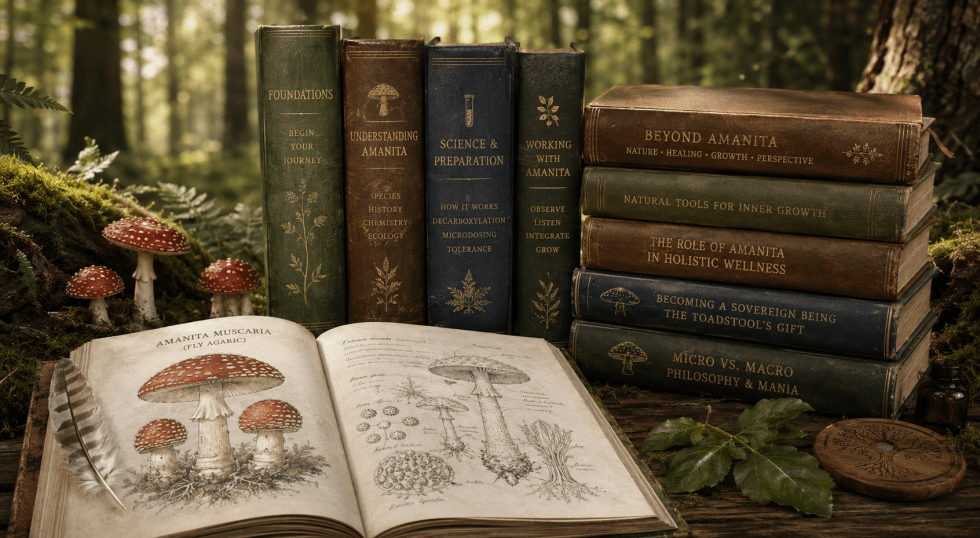
Posted on

Muscaria vs. Regalis vs. Pantherina: Understanding the Differences

If you’re new to the Amanita world, it can be hard to know where to start—or how each species differs. Muscaria, regalis, and pantherina may belong to the same genus, but they each carry entirely different energies and effects.

Here’s what you need to know—plus a look into how I experienced each one on my own journey.


🔴 Muscaria — The Gentle Teacher

Muscaria is where most people begin, and it’s often the most forgiving.

It’s supportive for the emotionally sensitive or energetically open. If you’re easing into nervous system repair, this is a solid ally.

At first, I didn’t feel much—until I realized the effects were cumulative. I needed higher amounts to notice anything dramatic, but that didn’t mean it wasn’t working. Muscaria was subtle, steady, and deeply nourishing when I gave it time.


👑 Regalis — Clear, Strong, Grounded

Eventually I moved into regalis, and it quickly became my favorite.

I loved its nutty, chocolatey aroma, but even more, I appreciated how it brought clarity, energy, and focus—but without overstimulation. I needed less than I did with muscaria to feel the same, or even stronger, effects.

At one point, I returned to regalis after a long pause and took my usual amount.
The result? It hit much harder than expected.
That’s when I realized what reverse tolerance really means—sometimes less is more.


🐆 Pantherina — Power with Purpose

My first experience with pantherina wasn’t pleasant. It made me feel aggressive, which I initially rejected. But over time, I realized that aggression was really internal resistance—I had reached a point where I needed to grow, push my body, and commit.

Once I started working out and caring for my vessel, pantherina became the mushroom that matched my pace. It now supports me when I need drive, movement, and sharper focus.

That said, it’s not for everyone. If your body is still learning to rest and regulate, pantherina can feel too intense.


💊 Form Matters Too

We offer three ways to work with muscaria, regalis, and pantherina. Each one suits different lifestyles and levels of readiness:

🍄 Dried Mushrooms

  • 35% naturally decarbed
  • Best for making your own slurry, extract, or capsules
  • Misfits are great for bulk DIY
  • Premium dried suits ceremony, art, or display

💡 Tip: Use a capsule machine (like Herb Affair) for clean DIY dosing.

💊 Microcapsules – 400mg each

  • Same 35% decarb as dried
  • Portable, precise, and easy to build into a routine
  • Effects vary depending on species and personal chemistry

Many find muscaria capsules calming.
Regalis micro can feel grounding and clear.
Pantherina micro may feel intense—best suited for those with higher metabolism or athletic output.

🧪 Slurry (Fully Decarbed)

  • Made using the 3-hour, 190°F, 2.8 pH method
  • Pure muscimol—no ibotenic acid left
  • Best for deeper rest, dreamwork, or emotional reset

Slurry – Fully decarbed for those short on time.


🧠 GABA, the Gut & Your Body’s Response

Amanita acts on the GABA-A receptors, which aren’t only in your brain—they’re also abundant in your gut nervous system.

That means people with gut sensitivities may experience GI activation, like cramping or loose stools. This doesn’t always mean something is wrong—it may reflect a nervous system response through your digestive pathways.

👉 Read our post on Amanita & Diarrhea to understand more about this connection.


🌀 Final Thoughts

Each Amanita species is a different kind of support.

  • Start with muscaria if you’re sensitive or new.
  • Try regalis when you’re ready for clarity without sedation.
  • Consider pantherina when you’re grounded, active, and aligned.

No matter which path you’re on, this work isn’t about effects—it’s about listening to your body, noticing shifts, and honoring the season you’re in.

📚Continue Reading

amanita vs psychedelics

What Makes Amanita Different from Psychedelics?
Read Next →


Posted on

🌍 Where Do Amanita Mushrooms Grow?

Where do Amanita mushrooms grow?

Have you ever wondered, where do Amanita mushrooms grow, can’t I just grow them myself? Well let’s dive into the answers you seek about Tree Partnerships, Global Zones, and Why You Can’t Just Grow Them


Most mushrooms can be cultivated in sterile labs or grow kits. Amanita mushrooms are wild, relational, and deeply connected to the ecosystems they thrive in.

To understand their power, you must understand their place. Because where Amanita mushrooms grow tells you everything about their potency, safety, and spirit.


🌲 Why You Can’t Grow Amanita Mushrooms

Amanitas are mycorrhizal mushrooms, meaning they grow in symbiotic partnership with trees. They form underground relationships with the root systems of specific species, exchanging nutrients and signaling forest health.

Unlike functional mushrooms like Lion’s Mane or Cordyceps, you cannot cultivate Amanita muscaria, regalis, or pantherina in labs, tubs, or bags. Their very existence depends on:

  • The right tree host
  • Unpolluted soil
  • Undisturbed forest networks

They most commonly grow under:

  • Birch
  • Pine
  • Spruce
  • Fir

This is why Amanita is considered wildcrafted—never farmed. It must be respectfully foraged, never manufactured.


🌎 Where Do Amanita Mushrooms Grow Around the World?

Amanita mushrooms grow across Europe, Asia, North and South America, Australia, and parts of Africa. They are one of the most widespread mushroom genera on Earth, with fruiting seasons typically in late summer to early fall.

You’ll often find them in:

  • Temperate forests
  • High elevation mountain zones
  • Mossy, shaded clearings rich in tree diversity

Environmental factors like altitude, tree partner, and climate can impact their color, cap size, and chemical ratios (muscimol vs. ibotenic acid).


🍄 Amanita Species We Work With

There are over 600 species in the Amanita genus.
We work with three safe, distinguishable species:

  1. Amanita muscaria – Iconic red cap, white warts, mildest potency
  2. Amanita regalis – “The Royal Fly Agaric,” rich brown tones, earthy energy
  3. Amanita pantherina – Tan cap, highest muscimol concentration, most potent

Each has a unique balance of ibotenic acid (excitatory) and muscimol (GABAergic), and each behaves differently in the body.


❗ Why Was Amanita Classified as a Poison?

Much of the fear around Amanita stems from toxic lookalikes in the same genus—particularly:

  • Death Cap (Amanita phalloides)
  • Destroying Angel (A. virosa, A. bisporigera, A. ocreata)

These species contain amatoxins, compounds that attack the liver and kidneys. They’re responsible for most fatal mushroom poisonings worldwide.

However, the Amanita species we work with—muscaria, regalis, and pantherina—do not contain amatoxins. They are chemically and visually distinct.

Here’s how they differ:

SpeciesCapWartsToxinsSafety
MuscariaBright redWhiteIbotenic acid / muscimolNon-lethal, traditional
RegalisChestnutWhiteSamePotent but safe
PantherinaTanWhiteSameStrongest, requires respect
Death CapPale greenSmoothAmatoxinsFatal
Destroying AngelWhiteSmoothAmatoxinsFatal

They are not easily mistaken if basic identification practices are followed.


❌ Why Not Forage Amanita in the U.S.?

Though Amanita muscaria is found throughout North America, foraging in the U.S. comes with risks:

  • Higher ibotenic acid content in some regions
  • Premature harvesting lowers therapeutic potential
  • Environmental toxins from roadways, pesticides, and air pollution
  • Misidentification risks without deep mycology knowledge

We’ve personally seen variation in purity and potency from U.S.-foraged mushrooms, and this inconsistency is why we don’t rely on domestic sources.


🏔️ Why We Source from the Carpathian Mountains

All our Amanita mushrooms—muscaria, regalis, and pantherina—are foraged in the Carpathian Mountain ranges of Ukraine.

We chose this region for its:

  • Rich birch and pine forests
  • Low pollution, clean air, and deep soil
  • Generational foragers who understand these species
  • Consistent seasonal potency and full maturity

This allows us to offer clean, ethically sourced mushrooms that honor both tradition and the nervous system.


🧬 Final Thoughts: Where Do Amanita Mushrooms Grow?

They grow in the wild.
In partnership with trees.
In ecosystems still whole.

You cannot grow them. You must meet them.

And the place they grow matters as much as how they’re used.
So when asking, where do Amanita mushrooms grow?—the deeper truth is:
They grow in relationship, and only where the earth still remembers how.


📚📚Continue Reading

Posted on — 2 Comments

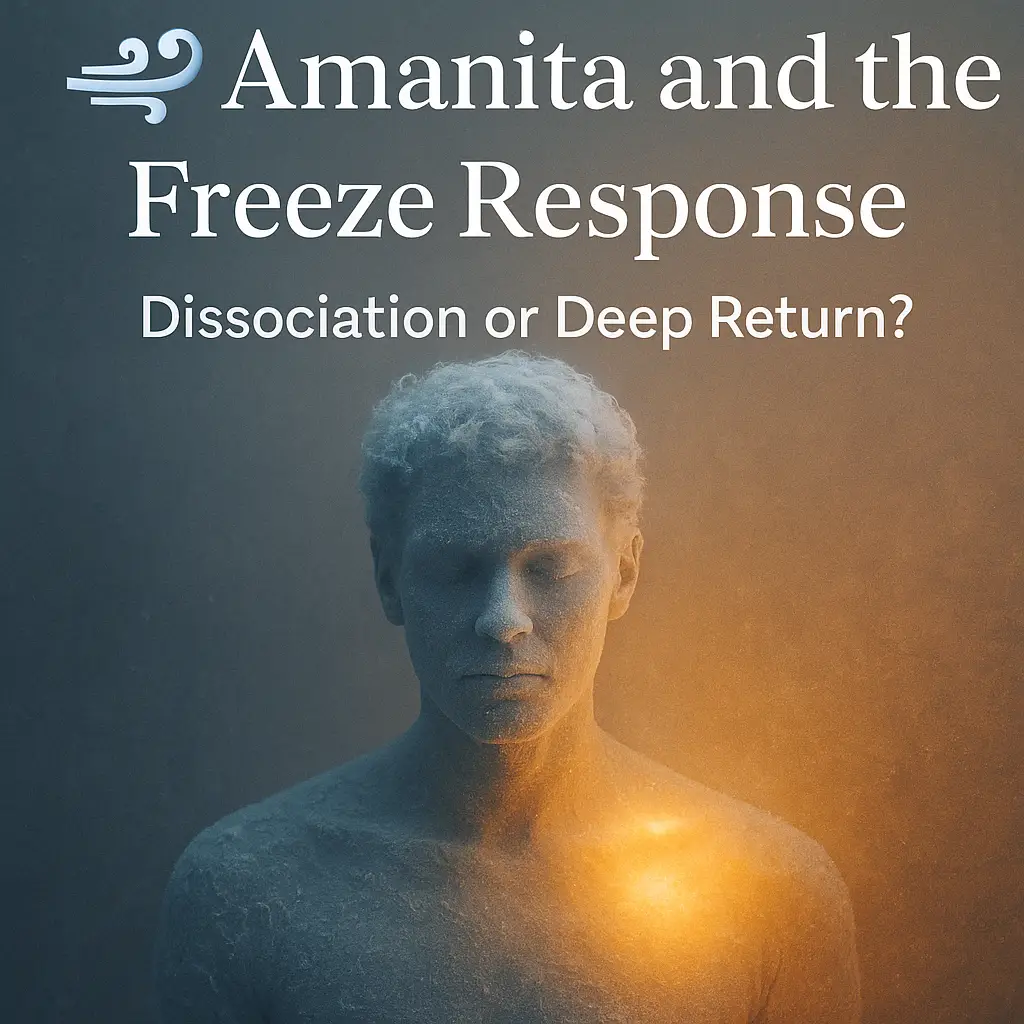
🌬 Amanita and the Freeze Response

Dissociation or Deep Return? Understanding Trauma, GABA, and the Sacred Role of Muscimol in Amanita and the freeze response

Published by Awakening Roots – Think Beyond

“You are not broken—you are paused. And the mushroom doesn’t push. It invites.”

For many walking the path of trauma recovery, the buzzwords are often “fight or flight.” But there’s a third response that hides in plain sight—and affects far more of us than we realize:

Freeze.

This post—Amanita and the Freeze Response—dives into how Amanita muscaria may support those who live in a state of emotional, physical, or energetic shutdown. And we’ll also clear up a common misconception:

Is Amanita a dissociative or a healing ally?

Let’s explore the science and the soul.


❄️ What Is the Freeze Response?

Freeze is what happens when the body says:

“I can’t fight. I can’t run. So I’ll play dead—maybe it’ll be safe later.”

It’s not weakness. It’s survival.

The freeze state often shows up as:

  • Chronic fatigue
  • Emotional numbness or indifference
  • Shutdown in response to stress
  • Inability to make decisions or take action
  • Feeling “disconnected” from your own life or body

This is not a mindset issue. It’s nervous system patterning—often from unprocessed trauma.


🌿 How Amanita May Help Unfreeze the System

Unlike serotonin psychedelics or cannabis, Amanita doesn’t stimulate or escape.

It works through the GABA-A receptor system—the body’s rest-and-restore network.

Muscimol (the active compound in fully decarboxylated Amanita) supports:

  • Parasympathetic regulation (aka: relaxation and safety)
  • Sleep cycle recalibration
  • Dream return (REM restoration)
  • Slow, rhythmic nervous system repair
  • Emotional accessibility without overstimulation

Rather than “activating” the freeze, Amanita may gently help unwind it.

“It gives the system permission to thaw—not explode.”


🌀 But Wait—Isn’t Amanita a Dissociative?

This is where it gets nuanced—and where so many guides and sources miss the mark.

Yes, Amanita can create dissociation—but only under certain conditions:

  • High doses, especially of ibotenic acid-rich material
  • Raw caps that haven’t been properly decarboxylated
  • Pantherina used without guidance
  • People with extreme trauma being overstimulated

That’s where the “deliriant/dissociative” label comes from.

However—at low to moderate, fully decarboxylated doses, like in our Slurrys, Amanita does not push you away from yourself. It does the opposite.

It brings you home to the body—gently, patiently, and with no rush.

This isn’t speculation—it’s based on years of personal experience and community feedback.


⚖️ Amanita vs Traditional Dissociatives

SubstanceEffect ProfileRisk of DependenceNervous System Support?
Cannabis (high dose)Emotional detachment, dream lossYesCan mask dysregulation
KetamineNumbing, ego-blasting, clinical useYesTemporary dissociation
BenzodiazepinesPanic suppression, sedationYesArtificial GABA mimicry
Amanita (low dose)Stillness, emotional awareness, dream returnNoYes — GABA supportive

🌱 Who Might Benefit?

Amanita may support those who:

  • Struggle to feel or express emotions
  • Can’t seem to “get going”
  • Are caught in freeze/shutdown cycles
  • Are healing from nervous system burnout or spiritual dissociation
  • Want to return to dreaming and sacred sleep

It’s not about “doing more.”
It’s about being safe enough to be here again.


🌕 Final Thoughts

Amanita is not a psychedelic. It’s not a dissociative.
Nor is it here to blast you into the stars.
Rather It’s here to soften the ice—so you can hear yourself again.

“The freeze protected you. The mushroom reminds you you’re safe now.”

You don’t need to fight or flee anymore.
There’s another path. And it begins with stillness.


Check out our YOUTUBE channel where we come alive with educating you to Awaken to your Roots.

Posted on — 2 Comments

🍄 What Makes Amanita Different from Psychedelics?

amanita vs psychedelics

“Amanita doesn’t take you out of your mind—it brings you deeper into your body.”

In today’s world, the word mushroom often gets tossed in with the word psychedelic—and while that’s sometimes true, it’s not always accurate.

Amanita muscaria and Amanita pantherina are not your typical psychedelic mushrooms. They don’t work on the serotonin system. They don’t induce colorful visuals or wild mental trips.

So let’s clear it up.


🌿 Amanita is Not Psilocybin

Psilocybin mushrooms (often called “magic mushrooms”) work by activating the 5-HT2A serotonin receptors, creating dreamlike visuals, ego dissolution, and mind-expansion.

Amanita works differently.

It contains two primary compounds:

  • Muscimol (the primary active compound)
  • Ibotenic acid (which partially converts into muscimol when prepared properly)

Instead of triggering serotonin, muscimol interacts with the GABA system, which is responsible for relaxation, regulation, and deep nervous system rest.


🧬 What This Means for the Experience

Because of this different interaction:

  • Amanita doesn’t “trip” you out.
    It’s often grounding, strange, sleepy, dreamy, or gently euphoric.
  • There are rarely visuals.
    When they do occur, they are more like waking dreams—not hallucinations.
  • You stay present.
    Many describe it as a “truth serum,” making it easier to access hidden emotions or unconscious habits.

🔮 Why We Call It a Sacred Supplement, Not a Psychedelic

At Awakening Roots, we don’t offer psychedelics.
We offer earth-based tools that support nervous system recalibration, emotional clarity, and inner work. That’s what Pantherina Slurry and Clarity Capsules are for.

They are legal, non-psychedelic, and deeply spiritual—when used intentionally.

This is not a “trip.” It’s a reconnection.


🤲 Safety Still Matters

Though it’s not a psychedelic, Amanita is powerful. It should not be mixed with alcohol or medications, and dosage is everything.

Check out our post:
👉 WARNING! Pantherina Slurry is Strong


🌕 Final Thoughts

Amanita is not a psychedelic.
It’s something older. Stranger. Gentler. Wilder. It doesn’t blast open your crown—it helps you sink into your bones.

So when people ask, “Is this like shrooms?”
You can now smile and say:

“No. It’s something else entirely—and that’s the beauty of it.”

📚 Continue Reading

Amanita Muscaria Feel Like

What Does Amanita Muscaria Really Feel Like?

Read Next →

Posted on — Leave a comment

🐆 The Panther Mushroom: Why Real Amanita Pantherina Matters

Panther mushrom

If you’ve been searching for Amanita pantherina, also known as The Panther Mushroom, you’re not alone. It’s one of the most frequently asked questions in the mushroom community: “Who has real Pantherina in stock?” The answer? We do. And not only that — we provide the cleanest, most authentic form available, straight from nature.


🔥 Why the Panther Mushroom Is So Desired

Amanita pantherina contains a higher concentration of muscimol compared to its cousin Amanita muscaria. That means:

  • Deeper introspective states
  • Profound dreamwork potential
  • Ceremonial and spiritual intensity

Because it’s more potent, it’s best suited for those with experience or those seeking more immersive, inner-directed journeys.


⚠️ Why Powder Disappoints (and Can Mislead)

Many customers come to us disappointed by other vendors, saying they received:

  • ⚠️ Over-powderized caps or mystery blends
  • ⚠️ Faded, inactive material with no aroma
  • ⚠️ Effects that felt unnatural or off

That’s because grinding Amanita into powder rapidly degrades the active alkaloids — especially ibotenic acid and muscimol — reducing the integrity of the mushroom. Even worse, some vendors rely on synthetic research chemicals rather than genuine mushroom fruiting bodies.


🌿 Awakening Roots: The Real Deal

We’ve worked with Amanita since 2019, building trusted relationships with responsible foragers and directly sourcing from Northern European forests.

Here’s what you get when you choose The Panther Mushroom:

  • 🐾 Whole, dried Amanita pantherina buttons
  • 🍄 Naturally potent, rich brown caps with white warts
  • 📦 Fast, discreet shipping from the USA
  • 🔬 Absolutely no synthetics or additives — just nature

💡 Why Choose Pantherina Over Muscaria or Regalis?

If you’re looking for:

  • A milder and balanced journey → Try Amanita muscaria
  • A refined ceremonial mushroom → Go with Amanita regalis
  • A deep, trance-like experience → Pantherina is your mushroom

We love them all — but Pantherina is for the brave, the seasoned, and those ready for profound inner work.


🛍️ Ready to Try The Panther Mushroom?

We’re proud to say: Yes, we have Pantherina in stock.

👉 Explore Amanita Pantherina in our shop

Stay smart. Stay curious. And trust the mushrooms that come from Earth, not a lab.


Disclaimer: Amanita pantherina is not sold for human consumption. Our products are for ethnobotanical, spiritual, artistic, and educational purposes only. Always research responsibly.

Posted on — Leave a comment

👑 The Royal Fly Agaric (Amanita Regalis): Understanding the Difference

The Royal Fly agaric

If you’ve explored the world of Amanita mushrooms, you’ve probably heard of Amanita muscaria and Amanita pantherina—but there’s another, lesser-known gem: Amanita regalis, or the The Royal Fly Agaric.

For those wondering which variety is best for their path—whether spiritual, creative, or research-based—this guide will help you understand the differences between the three, and how to choose the right mushroom for your intentions.


🌟 Meet Three Amazing Mushrooms

🍄 Amanita Muscaria (The Classic)

  • Color: Bright red cap with white warts
  • Alkaloid Content: Balanced mix of muscimol and ibotenic acid
  • Experience: Gentle, grounding, dreamlike
  • Use: Perfect for beginners, artists, ritualists, and daily microdosers

🐆 Amanita Pantherina (The Intense One)

  • Color: Brown to olive cap with white warts
  • Alkaloid Content: Higher in muscimol, lower ibotenic acid
  • Experience: Potent, introspective, immersive
  • Use: Favored for advanced dreamwork, deeper inner healing, trance states

👑 Amanita Regalis (The Royal One)

  • Color: Golden-brown with bold white spots
  • Alkaloid Content: Similar to pantherina, but often more refined in experience
  • Experience: Balances depth with clarity, ceremonial yet bright
  • Use: Ideal for experienced explorers, spiritual seekers, and collectors

📚 Learn more about Amanita species


🧪 What Sets Regalis Apart?

  • Rare and Sought-After: Primarily found in Northern Europe, this mushroom is harder to find and often more expensive due to its limited availability.
  • Honored by Mycologists: Named Mushroom of the Year in 2000 by the German Mycological Society.
  • Refined Energy: Regalis offers a smoother experience—deep, but not overwhelming. It’s a favorite among ceremonial leaders.

✨ Which Amanita Is Right for You?

Here’s a quick “quiz” to help you decide:

1. Are you new to Amanita or prefer something balanced and gentle?
✅ Choose Amanita muscaria: The Fly Agaric

2. Are you experienced and seeking a strong, inward-facing experience?
✅ Choose Amanita pantherina: Panther mushroom

3. Are you drawn to rare plants, ceremonial work, and nuanced journeys?
✅ Choose Amanita regalis: The Royal Fly Agaric


🌿 The Awakening Roots Difference

Since 2019, we’ve been working hands-on with Amanita mushrooms. We’ve supported over 4,200 customers and built a growing tribe of thoughtful explorers. Our Regalis offerings are:

  • 💎 Pristine: Beautiful golden-brown, fully intact buttons
  • 🌲 Freshly harvested from Northern European forests
  • 📦 Shipped fast from the USA with care and intention

🛍️ Find Your Royal Match

Whether you’re collecting, creating, meditating, or studying—our full line of Muscaria, Pantherina, and Regalis mushrooms can help you align with the right plant ally.

👉 Explore Amanita offerings in our shop


Disclaimer: These mushrooms are sold for educational, artistic, and ethnobotanical interest. They are not intended for human consumption. Always do your own research and use responsibly.

Posted on — 1 Comment

The Effects of Amanita Mushrooms: What People Commonly Experience

muscaria full muscimol

After 5 years of researching, experimenting, sharing and developing a foundation for understanding the Effects of Amanita Mushrooms, we are happy to share the following:

Amanita is a genus of fungi that includes about 600 species, ranging from highly toxic to some edible mushrooms. So, understanding which mushrooms you are working with is important. We have focused on 3 species, muscaria, regalis, and pantherina.

Classification

  • Kingdom: Fungi
  • Division: Basidiomycota
  • Class: Agaricomycetes
  • Order: Agaricales
  • Family: Amanitaceae

While scientists have identified about 100,000 species of fungi, this is only a fraction of the 1.5 million species of fungus likely present on Earth. Edible mushrooms, yeasts, black mold, and the producer of the antibiotic penicillin, Penicillium notatum, are all members of the kingdom Fungi.

Toxicity and Edibility

While many Amanita species are toxic, some are edible. The death cap (Amanita phalloides) is responsible for a significant number of mushroom poisoning cases. Other toxic species include Amanita virosa and Amanita verna. Edible varieties, such as Amanita caesarea and Amanita rubescens, should be consumed with caution due to the risk of misidentification. But we are not here to talk about other mushrooms so let’s get to it.

What Effects Amanita Muscaria will have on you

This is best answered based on dosing1 and level of decarboxylation2 you are working with.

I see many articles claiming misinformation and fear. I encourage you to keep researching and finding the truth that resonates with you.

After 5 years we have seen Amanita muscaria, regalis and pantherina help so many people including ourselves with a variety of different issues.

Working with Amanita Micro Capsules or with Amanita Shake, Amanita Pieces, or Amanita Caps

Micro Capsules are so convenient. A great place to start for those just beginning to learn themselves and their needs.

At .0333 grams per capsule, 1 (amanita muscaria capsule) will not have any perceptual effects at all.

Depending on personal factors perceptual effects begin around 2-5 grams.

The effects experienced at this dose due to high amounts of Ibotenic Acid can be

Euphoric, excited, energetic, talkative, increased awareness, hightened sensory alertness, hunger, inhibitions are lowered, relaxed and ready for you name it.

As you increase the dose with muscaria and regalis you may find unwanted effects. Let’s explore that:

Amanita has 3 alkaloids that you should understand:

Ibotenic Acid, Muscimol and Muscarine.

These all bring their own effects wanted and unwanted. When you see words like Decarboxylation or precent of conversion it has to do with the presence of those alkaloids. These effects maybe experienced differently based on your sensitivities and lifestyle.

Ibotenic Acid may cause Headaches and GI upset.

Muscimol may cause twitches and dissosciation of self.

Muscarane may cause sweats and salvation.

Now that your informed what can you do about that?

If you have sensitivities to ibotenic acid choose our Amanita Slurry or learn how to make one yourself.

If you have sensitivities to muscarine choose Amanita pantherina Slurry or learn how to make one yourself.

Know you can enjoy working with muscimol which has more of the sedative and relaxation benefits than ibotenic acid does.

This boils down to a You issue. What do you need, or rather, what are you in need of that Amanita helps you with?

I know I didn’t make that clear. I’ve seen Amanita interact with others on so many different walks. I can’t even express the “wow!” that it will create in your life if, you can be open minded enough to understanding your needs.

Subtitle for This Block

Title for This Block

Text for This Block

Awakening Roots has established a standard in which to receive Amanita into your life. It is a beautiful beyond mushroom. It makes sense that it has traditionally been used iconically to represent the gifts under the evergreen tree. I cannot express enough how Amanita has transformed the lives of many and mine. It truly is a gift from the beyond.

Remember You create your Amantia Experience. I am here just offering a Beautiful Beyond Mushroom.

If you’re not sure how to Work with your Amanita:

  1. Head over to Amanita Experiences & Beyond
  2. Check out my Amanita Mushroom FAQ
  3. I have a few educational videos on TikTok
  4. If your a serious researcher and want a mycologists opin, or a Pharmacia expert taper, then I suggest the Amazing Facebook group. If you prefer Reddit check r/AmanitaMuscaria : p s : I am a verified vendor in both groups. So shout me out with Love and encouragement it makes me smile!
  5. If you’re still needing some help reach out to my email AskMarlu@Gmail.com

  1. Dosing varies from Micro (small amount) that is sub perceptual (barely if at all felt) to Macro. Macro (Big amount) is clear to the point of feeling. Can be threshold, heroic and beyond.
    ↩︎
  2. Decarboxylation is a chemical reaction that removes a carboxyl group and releases carbon dioxide (CO2). Usually, decarboxylation refers to a reaction of carboxylic acids, removing a carbon atom from a carbon chain.  ↩︎